BERÄTTELSER
”Om någon hade kunnat komma för att hjälpa dig, vem skulle det ha varit? Vad skulle de ha gjort och sagt? Hur skulle det ha känts i din kropp?”
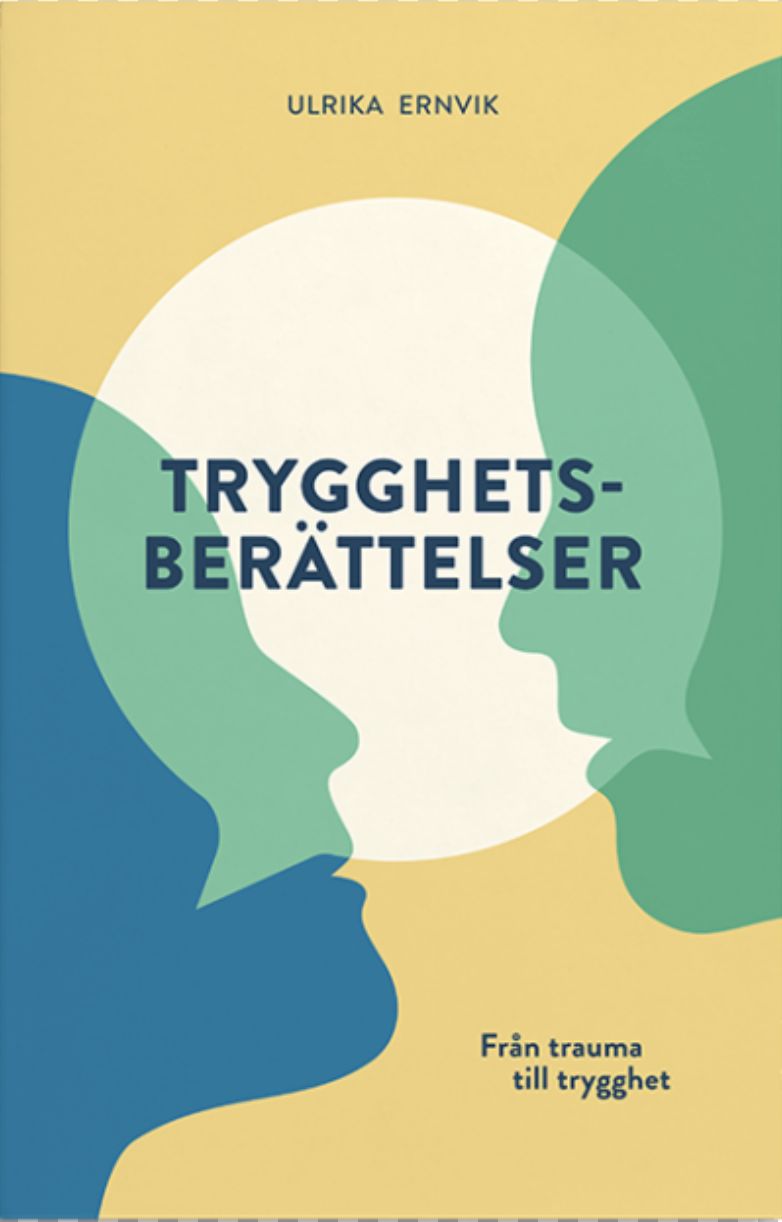
Dessa tre frågor är kärnan i SafetyStories – en metod för traumabearbetning utvecklad av Ulrika Ernvik.


Latest news
Spring 2026
Webinar
Spring 2026
Lectures
I am happy to give a lecture on Safety Stories in the context where you are. To get started with using Safety Stories, it is good if participants first get a full day that includes both theory and training, with a half-day follow-up a few months later.
Spring 2026
Guidance
I offer guidance in Safety Stories for groups and individuals who have completed training in Safety Stories.
Background and development
SafetyStories© is a trauma processing model that I have developed. It started to take shape in 2015, when I kept hearing about children who were traumatized but not getting the help they needed. I felt there had to be a way for ‘ordinary’ people to help each other process trauma.
I started reading everything I could find about trauma and realized that research over the past decades has highlighted many interesting aspects that are not included in many of the trauma response models we use. From what I learned, a model began to emerge, which I came to call SafetyStories, because safety and storytelling are the two most important and powerful ingredients of effective trauma work.
For some years now, I have been using, developing and training others to use SafetyStories.
In July 2023, my book on SafetyStories was published in Swedish and in March 2025 it was published in English. The book can be purchased from the publisher www.borellme.se and eventually also via this website.
Trainings are offered regularly, and the next training in English will start on March 21 as a four-session webinar. For more information, please write to ulrika.ernvik@gmail.com
There is no research done on the model itself, although it is based on research. My hope is that the model will be refined and developed as it is used, and that eventually follow-ups can be made so that we know for sure how helpful the model is.
The model is designed to be as safe as possible, so that the risk of re-traumatization or otherwise harming others or myself is minimized.
From trauma to safety
Many children and adults around the world have experienced traumatic events and are traumatized. A traumatizing event is an event where the person felt alone, afraid and powerless.
The human reaction in such situations is to first try to find safety, and then to fight or flee. If this is not possible – which is often the case, especially for children – we freeze or collapse. This is when the traumatic experience is stored in the body.
If we can fight or flee, the memory becomes a painful memory, but not necessarily a traumatic memory. A painful memory is easier to process, but a traumatic memory is not stored together with other memories and can therefore be difficult to access.
Through play, stories, security and physical expression, the memory becomes easier to access and process.
In SafetyStories, we invite and include safety in the traumatic memory in many ways: through the presence of a real safe person here and now, through the presence of an imagined safe person in the memory, through using the body to create empowering movements, through play and creativity that builds in joy, and through creating safe relationships and strategies so that life here and now is as safe as possible.
Because so many people – especially children – need the help of safe adults to process traumatic memories, there is no way that everyone can be helped by professionals trained in trauma debriefing. Therefore, we all need to learn how to safely guide others through trauma processing.
A safe adult is a person who has worked through her own traumas, who knows how to ground herself when overwhelmed, who can empathize with others and see what they need, and who can respect others and their boundaries.
For a child, it could be a parent, foster parent, other caregiver, a teacher or someone else the child feels safe with. For an adult, it could be a partner, friend, colleague or a leader of some kind.
SafetyStories is designed to help any safe adult guide a child or other adult through trauma processing. As I have been using SafetyStories for many years, I have also realized that it has become a way of life for me – a lifestyle.
The 10 ladders
The following steps need to be part of SafetyStories. It is not a strict step-by-step model, as many of the steps are integrated into each other.
Preparation
- Find a safe adult to guide the child through the process.
- Make sure that this safe adult knows how to ground the child based on what we know from the polyvagal theory: how to engage the social engagement system and activate the vagus nerve.
- Prepare a timeline: things that happened before and after the traumatic event, which will help the event find its place in the child’s life story. This could be memories from birth and the first year, some things that happened just before the event, and about 10-15 neutral memories of things that happened afterwards. This helps the brain understand that what happened then is not happening now – it is over.
Narrative
- The child’s trauma story: Listen to the child’s story – it can be told in words, through drawing, play or other means. The story can be very short and details are not needed. Help the child to notice how the body reacts to the story and how the body reacted in the traumatic moment.
- The child’s safety story: Encourage the child to invite a safe person into the memory through visualization. It can be someone the child knows, someone from a movie, a fairy tale character, an animal or someone else the child feels safe with. Encourage the child to visualize what the person does and says. Help the child to notice how body sensations change when safety comes into the memory.
- The act of triumph: Notice if there is trauma energy that needs to leave the child’s body and give time and space for it. Let the child embody the movements she feels like doing when safety comes into her memory. Do the actions – the triumph actions – together with the child.
- The adult’s story back to the child: Tell the child’s story of self – the safety story – including the trauma story, the safety story and the triumph story. Include:
- what happened before the traumatic event (you can start at birth or just a few hours before)
- the traumatic event, as told by the child
- the new story of how security came in
- how the body felt both in the traumatic moment and when safety came
- the acts of triumph that the body did when security came in
- messages the child needs to hear, such as “you did your best”, “it wasn’t your fault”, “no child should have to go through this”
- memories of what has happened since the traumatic event, ending with this moment here and now
Sometimes we need to start the storytelling with the adult telling the child about the traumatic event, including what happened before and after and the messages the child needs to hear. The child can then be ready to tell their own story.
Finishing work
- Explore with the child what she started to believe about herself and the world. Identify thoughts that are not helpful and replace them with helpful thoughts.
- Explore together what the child has lost and what she needs to grieve. Grieve together.
- Make sure the child can continue to feel safe, has strategies for similar situations in the future, and then celebrate together that it is over. Draw pictures of how safety came, role play it, dance it, live it!
Contact me
Do you have questions, concerns or want to book me?
Fill out the form and I will get back to you as soon as I can.